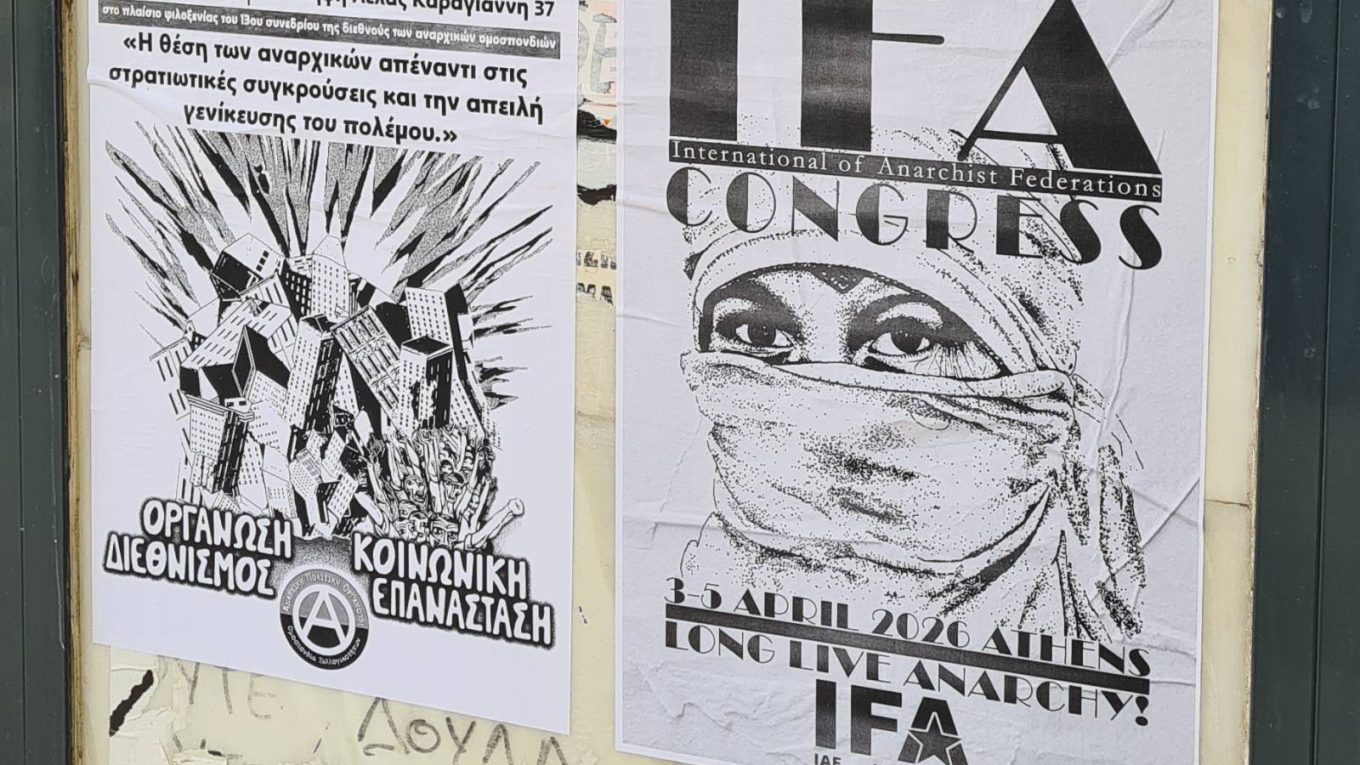
Report from the 13th IFA Congress, 3-5 April 2026 , Athens, Greece
Translations below: Serbo-croat
A report from the 13th Congress of the International of Anarchist Federations (IFA-IAF), Athens
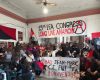
The 13th Congress of the International of Anarchist Federations (IFA-IAF) took place in Athens on the weekend of 3-5 April 2026, hosted by Αναρχική Πολιτική Οργάνωση – Ομοσπονδία Συλλογικοτήτων (Anarchist Political Organisation-Federation of Collectives -APO). Amongst the other federations which participated were Federazione Anarchica Italiana (FAIt, Italy), Fédération Anarchiste (FA, French-speaking), Federazione Anarchica Siciliana (FAS, Sicily), Federación Libertaria Argentina (FLA), Federacija za anarhistično organiziranje (Federation for Anarchist Organizing, FAO, Slovenia & Croatia), Федерация на анархо-комунистите в България (FACB, Federation of Anarchist-communists in Bulgaria), Anarchist Federation (AF, Britain), with guests from observing individuals from Brazil (Aurora Negra & Terre Livre) and Serbia (Klasna Solidarnost). Federation members and associated groups from Mexico, Brazil, Czech-Slovak, German-speaking and Kurdish Anarchist Forum did not participate, the latter due to concerns about the situation in the Middle East. Cuban comrades were also invited but contact has been increasingly difficult during the economic blockade.
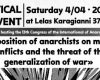
To make the conference run smoothly the Congress was hosted at a single venue, the squat Lelas Karagianni 37 (LK37), an impressive long-standing apartment block, the oldest squat in Greece. Lunch and dinner were provided by comrades in the squat and some accommodation was made available to visitors. Translation equipment was hired to provide live translation, although the main language was English. LK37 was also the venue of a public meeting ‘The position of anarchists on military conflicts and the threat of generalisation of war’, on the Saturday evening, hosted by APO.
The IFA Congress takes place every three to four years with intervening delegate meetings (CRIFA) being used to connect the federations and plan agendas and activities, to develop documents for discussion and consensus building. The decision-making is bottom up such that federations initially propose items for the agenda and then produce their papers and positions on those topics to be presented to the congress. The congress was structured with plenary sessions with all federations present, for example, on the subject of anarchist perspectives on worldwide insurrections (such as the uprising in Iran, areas of the Mediterranean, Madagascar, Indonesia and Nepal). In addition, participating federations to the congress co-organised a series of workshops on the following topics: Sudan, the far right, education struggles, environment, patriarchy & gender violence and the digital world (online materials and cybersecurity) and some administrative aspects of IFA were discussed.
The first plenary ‘Against modern totalitarianism of State, Capitalism and War’ shared perspectives on anti-militarism. Themes included opposition to NATO air bases or planes (Italy, Sicily, Crete) and NATO expansion in Eastern Europe, reintroduction of military service/draft (Croatia, France), state suppression of Palestine solidarity activity (such as the terrorism law used against Palestine Action in UK), increased military spending including dual-use investments such as airport, sea port or rail system expansions that workers could intervene in.
Whilst it is not always possible to reach consensus, the congress made significant progress on a number of issues. In particular the Italian and Greek federations had both produced detailed positions on gender struggles with documents approved by their federations with insights on systemic gender violence (APO) and transfeminism (FAIt), for example from FAI Italy: “The rooting and expansion of transfeminism and queer movements is increasingly indispensable in the face of the intensification of patriarchal oppression in the current phase, in which, in various parts of the world, its link with religious oppression is increasingly strong. In Italy, the Meloni government has produced specific legislative acts of a patriarchal and familist character to support the birth rate within the traditional family. Familism and the defence of the traditional, sexist and hierarchical family, however, are not only the heritage of the reactionary right, because there is also a familism in the tradition of the left.” The FAIt also linked increased militarisation to a rise in macho culture.
APO focussed on patriarchal violence, “In a period in which modern totalitarianism is mobilized to suppress the peoples who revolt and nationalist and fascist voices are increasing, women, in every part of the planet, and especially those of the plebeian [working class] strata, are faced, beyond the risk of death, displacement, hunger and disease, with the daily threat of gender-based violence, sexual torture and executions, as tools of conquest and subjugation.” APO highlighted attacks on abortion rights in USA, and the systematic use of gender violence as a weapon of war in Sudan and Palestine, but also similarly to that in Italy, nationalists’ turn to ‘female nature’ to assert a role for motherhood in the national interest.
The ‘Rise of the Far Right, and Anti-fascist Response’ workshop was presented by the AF and FA. AF used the context of the rise of Reform UK to discuss cultural aspects of far right ideologies and activity. There was great interest in the use of public order laws in Britain to limit protest. Whilst pre-emptive arrest via conspiracy charge is not new in the UK, this appears harder for the state to justify in countries where there has been a history of dictatorship or where anti-fascism is even mentioned as part of the constitution. In Italy and Greece the roots from fascist dictatorships run deep. But culturally fascist themes such as ‘God, Country and Family’ are coming back, and now anarchists and their locales are being specifically targeted by the police during the far-right leadership of Meloni in Italy. Although the heyday of Golden Dawn in Greece is in the past, in part due to their suppression by the state after their murder of an anti-fascist singer, their members’ links to the more media friendly ‘soft face’ far right have not disappeared.
Whilst it may be possible to appeal to history in some countries, in Brazil, Bulgaria and Serbia the threat of neo-nazi violence on the street is still today a big threat because they operate and meet or put on events openly, as well as directly attacking and sometimes murdering anarchists on the streets. Anarchists have in turn found creative ways to combat them such as encouraging mass self-defence classes in neighbourhoods, such as in Brazil favela communities.
The education workshop was an important opportunity to understand the changes in Greece where private partnership models are being imposed on high schools and teachers who are resisting privatization and the increased use of intensive evaluation of pupils across the age range are being victimised. There is also increased threat to anarchist organising in universities. Therefore the need for strong base unions is vitally important. On the encouraging side of things Congress heard about a free high school Escula Libre de Constitucion (ELC) in Buenos Aires, Argentina that is aimed at using anarchist methods of schooling with 16-18 year olds and also the Anarchist Education Laboratory (LEA) in São Paulo, Brazil at the Social Culture Center (CCS). The LEA initiative, carried out by the Terra Livre Library, aims to study, produce, and experiment with pedagogical practices for children, including their use at anarchist bookfairs to facilitate meaningful input of children at those events.
The workshop session on ‘Plundering of Nature’ was introduced by APO focussed on political, cultural and social problems surrounding the climate crisis and the plundering of nature and local communities by the state and capital. The session included discussion of popular oppositions to resource extraction, ‘green’ capitalism and control over nature and local communities. The session also discussed increased urbanisation, commercialisation and gentrification. Strong links were made to anti-militarism regarding protests against infrastructural development. Problems with the $1T UN ‘2030 Agenda’ climate change investment were highlighted.
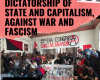
At the end of the weekend the 13th IFA congress produced a joint statement ‘Against Global Dictatorship of State and Capitalism, against War and Fascism’ focussed on anti-militarism, linked to the plenary session. It also produced a solidarity statement for the Cuban anarchists. Both will be ratified by the IFA federations before publication. Great applause was heard as Klasna Solidarnost (Serbia) announced their intention to apply to join IFA as an associated group (a status that is used for groups who have the intention of growing into a federation). A venue for the next congress was proposed whilst the FA agreed to take on the Secretariat role after the good work of FAO over the last few years. A plan to hold another meeting in the Mediterranean was agreed as was a forthcoming issue of the IFA journal on anti-militarist perspectives, where IFA member federations will present articles. Following the informative workshop on Sudan by FAS and FA at the Congress, a new solidarity poster was presented, highlighting Sudanese anarchist struggles. After the weekend a Sudanese migrant solidarity meeting was held in Athens which gave an opportunity for those staying longer to learn more about the situation. IFA comrades were also invited by FAO to the next Balkan Anarchist Bookfair in Skopie, Macedonia in September. The congress concluded with a noisy tribute to FA comrade Jean-Marc Raynaud – founder of Libertarian Editions and the anarchist school “Bonne Aventure” – who died at the end of March.
Translation into Serbo-croat:
Izveštaj sa 13. kongresa Internacionale anarhističkih federacija (IFA)
Kongres Internacionale anarhističkih federacija (IFA-IAF), trinaesti po redu, održan je u Atini tokom vikenda 3. do. 5. aprila, u organizaciji Anarhističke političke organizacije – federacije kolektiva (APO – Αναρχική Πολιτική Οργάνωση – Grčka). Među ostalim federacijama koje su učestvovale našle su se i Federazione Anarchica Italiana (FAIt – Italija), Fédération Anarchiste (FA – francusko govorno područje), Federazione Anarchica Siciliana (FAS – Sicilija), Federacion Libertaria Argentina (FLA), Federacija za anarhistično organiziranje (FAO, Slovenija i Hrvatska), Федерация на анархо-комунистите в България (ФАКБ – Bugarska), Anarchist Federation (AF, Britanija), zajedno sa gostima u vidu posmatrača Aurora Negra i Terra Livre (Brazil) kao i Klasna solidarnost (Srbija). Federacije – članice i pridružene grupe iz Meksika, Brazila, čehoslovačkog te nemačkog govornog područja, kao i Kurdskog anarhističkog foruma nisu učestvovale. Ovi poslednji bili su sprečeni zbog eskalacije situacije na Bliskom istoku. Kubanski saborci su takođe bili pozvani ali je kontakt sve više otežan usled ekonomske blokade od strane SAD.
Kako bi organizacija konferencije protekla glatko, kongres je u celosti održan u jednom prostoru, skvotu Lelas Karagianni 37 (LK37), impresivnom i dugotrajnom zdanju koje je ujedno i najstariji skvot u Grčkoj. Saborci iz ovog skvota obezbedili su ručak i večeru tokom trajanja kongresa, kao i smeštaj za deo učesnika. Oprema za prevođenje je iznajmljena kako bi se obezbedilo simultano prevođenje, iako je glavni jezik u upotrebi bio engleski. LK37 je takođe bilo mesto javnog događaja ‘’Pozicija anarhista po pitanju vojnih sukoba kao i pretnje generalizacije rata’’ koji je bio održan u subotu, 4. aprila u organizaciji APO.
Kongres IFA održava se na svake tri do četiri godine sa sastancima delegata (CRIFA) koji se održavaju između kongresa kako bi se osnažila povezanost među federacijama kao i radilo na planiranju agendi i aktivnosti, razvijanju dokumenata za diskusiju i izgradnju konsenzusa. Donošenje odluka zasniva se na modelu ‘’odozdo prema gore’’ u smislu da federacije inicijalno preporuče tačke za agendu i potom podnesu i njihove tekstove i pozicije na date teme koje se onda izlažu na kongresu, koji je strukturisan u vidu plenumskih sednica kojima prisustvuju sve federacije, na primer na temu anarhističkih pogleda na narodne pobune i ustanke širom sveta (poput onih u Iranu, delovima Sredozemlja, Madagaskaru, Indoneziji i Nepalu). Osim ovih plenuma, federacije učesnice kongresa takođe su zajednički organizovale i seriju radionica sa sledećim temama: Sudan, ekstremna desnica, borba za obrazovanje, životnu sredinu, protiv patrijarhata i rodno-zasnovanog nasilja, o sajber bezbednosti u digitalnom svetu, kao i radionice na temu administrativnih aspekata IFA.
Prva plenumska sednica ‘’Protiv modernog totalitarizma države, kapitalizma i rata’’ pružila je deljene perspektive o anti-militarizmu. Neka od iskustava bila su protivljenje vazdušnim bazama NATO i avionima (Italija, Sicilija, Krit), kao i NATO ekspanziji u Istočnoj Evropi, ponovnom uvođenju vojnog roka i mobilizacije (Hrvatska, Francuska), državnoj represiji nad aktivnostima solidarnosti sa Palestinom (kao što je zakon u Ujedinjenom Kraljevstvu koji je označio pokret Palestine Action kao teroristički), povećanom trošenju na vojne budžete uključujući i razvoj upotrebe aerodroma, luka ili pruga u ove svrhe, a u kojima bi radnici mogli da intervenišu.
Iako nije uvek moguće postići konsenzus, kongres je ostvario značajan progres po brojnim pitanjima. Konkretno, italijanska i grčka federacija zajedno su istakle detaljne pozicije po pitanju rodne borbe sa dokumentima odobrenim od strane njihovih federacija koji pružaju uvide u sistemsko rodno nasilje (APO) kao i transfeminizam (FAIt), čiji odlomak služi kao primer: ‘’Ukorenjivanje i ekspanzija transfeminizma i kvir pokreta sve više je neophodno u suočavanju sa patrijarhalnom opresijom u kojoj, u raznim delovima sveta, njena veza sa religijskom opresijom sve više jača. U Italiji, vlada Đorđe Meloni proizvela je specifična zakonodavna akta patrijarhalnog i familističkog karaktera kako bi uticala na stopu nataliteta unutar tradicionalne porodice. Familizam i odbrana tradicionalne, seksističke i hijerarhijske porodice, ipak, ne predstavljaju samo nasleđe reakcionarne desnice, zato što familizam takođe postoji i u tradiciji levice’’. FAIt takođe povezuje povećanu militarizaciju sa usponom kulture mačizma.
Sa druge strane, APO se fokusira na patrijarhalno nasilje: ‘’U vremenu u kojem je moderni totalitarizam mobilisan kako bi vršio represiju nad narodima koji se pobune, i u kojem se nacionalistički i fašistički glasovi umnožavaju, žene u svakom delu sveta – pogotovu pripadnice radničke klase – osim što su suočene sa rizikom od smrti, raseljavanja, gladi i bolesti, suočene su i sa svakodnevnom pretnjom rodno zasnovanog nasilja, seksualne torture i egzekucija kao alatki porobljavanja i potčinjavanja.’’ APO je naglasio napade na prava na abortus u SAD, kao i sistematsku upotrebu rodno zasnovanog nasilja kao oružja u ratovima u Sudanu i Palestini, pa čak i, na sličan način, zloupotrebu pojma ‘’ženska priroda’’ od strane nacionalista u Italiji kako bi se ženama pripisala uloga majčinstva zarad nacionalnih interesa.
Radionica pod nazivom ‘’Uspon ekstremne desnice i antifašistički odgovor’’ prezentovana je od strane britanskog AF i francuske FA. AF je iskoristila primer uspona partije ‘’Reform UK’’ kako bi predstavila kulturne aspekte ideologije i aktivnosti ekstremne desnice. Ukazano je i na korišćenje zakona o javnom redu i miru od strane države kako bi se protesti u Britaniji ograničavali. Iako preventivna hapšenja uz izgovor o kovanju zavere nije novina u Ujedinjenom Kraljevstvu, deluje da je pravdanje ovakvih hapšenja i gonjenja od strane države teže u zemljama koje imaju istoriju diktatura ili u kojima je antifašizam čak i spomenut kao deo ustava. U Italiji i Grčkoj, koreni ostavljeni od strane fašističkih diktatura sežu duboko, ali sada se i fašistički lajtmotivi poput ‘’Bog, otadžbina, porodica’’ vraćaju, te su anarhisti i njihove prostorije u Italiji targetirani od strane policije tokom vladavine ekstremno desne partije Đorđe Meloni. Što se Grčke tiče, iako je vrhunac ‘’Zlatne zore’’ iza nas, delom i usled njihovog potisnuća od strane države nakon njihovog ubistva repera anti-fašiste 2013. godine, veze njihovih članova sa onim delom ekstremne desnice koja je zamaskirana i više prijateljski nastrojena prema medijima nisu iščezle.
U Brazilu i Bugarskoj pretnja neonacističkog nasilja na ulicama i danas je relativno velika pretnja sa obzirom na to da ove grupe operišu, sastaju se ili održavaju javne događaje, a ponekada i otvoreno napadaju pa čak i ubijaju anarhiste na ulici. Zauzvrat, anarhisti su našli kreativne načine da im se suprotstave, kao što je na primer održavanje masovno posećenih časova samoodbrane u komšilucima, kao što je slučaj sa zajednicama u favelama u Brazilu.
Radionica o obrazovanju pokazala se kao važna prilika da se razumeju promene u Grčkoj u kojima se modeli javno-privatnog partnerstva nameću srednjim školama i prosvetnim radnicama i radnicima koji se odupiru privatizaciji školstva kao i povećanoj upotrebi intenzivne evaluacije učenika. Primetna je i povećana pretnja za anarhiste koji se organizuju na univerzitetima. Stoga, potreba za jakim sindikatima je od vitalnog značaja. Kongresu je predstavljena i ohrabrujuća priča o slobodarskoj srednjoj školi Escuela Libre de Constitucion (ELC) u Buenos Ajresu (Argentina), koja je usmerena na korišćenje anarhističkih metoda u obrazovanju dece uzrasta 16-18 godina. Drugi sličan primer predstavlja Anarhistička laboratorija obrazovanja (LEA) u Sao Paolu (Brazil), u Društveno-kulturnom centru (CCS). LEA inicijativa, iza koje stoji Terra Livre, ima za cilj učenje, proizvodnju i eksperimentisanje sa pedagoškom praksom u radu sa decom, što uključuje i njihovo korišćenje na anarhističkim sajmovima knjiga kako bi se olakšao smislen doprinos od strane dece na takvim događajima.
Radionica o uništavanju životne sredine predstavljena je od strane APO i fokusirala se na političke, kulturne i društvene probleme koji se tiču klimatske krize i uništenja životne sredine i lokalnih zajednica od strane države i kapitala. Deo sesije je uključio i diskusiju o narodnom otporu ekstrakciji resursa, ‘’zelenom kapitalizmu’’ kao i kontroli nad prirodom i lokalnim zajednicama. Takođe je bilo priče i o uvećanoj urbanizaciji, komercijalizaciji kao i džentrifikaciji. Ukazano je i na problematičnost ‘’Agende 2030’’ Ujedinjenih Nacija, koja podrazumeva investiciju od čak trilion dolara usmerenu na poboljšanje borbe protiv klimatskih promena.
Na kraju 13. IFA kongresa su učesnici sastavili zajedničku izjavu ‘’Protiv globalne diktature države i kapitalizma, protiv rata i fašizma’’ koja se fokusirala na anti-militarizam. Takođe je sastavljena i zajednička izjava solidarnosti sa kubanskim anarhistima. Obe izjave će biti ratifikovane od strane IFA federacija pre njihovog objavljivanja. Veliki aplauz se čuo kada je Klasna solidarnost iskazala nameru da aplicira za članstvo u IFA kao združena grupa (u pitanju je status koji se koristi za grupe koje imaju nameru da porastu u federaciju). Predloženo je i mesto održavanja sledećeg kongresa, dok se francuski FA složio sa tim da preuzme ulogu Sekretarijata nakon dobro obavljenog posla od strane FAO tokom prethodnih nekoliko godina. Dogovoren je i plan da se održi još jedan CRIFA sastanak u sredozemnom području, kao i očekivano izdanje IFA žurnala sa prilozima o anti-militarizmu, gde će članice IFA predstaviti svoje članke. Nakon radionice o Sudanu, prikazan je novi poster solidarnosti koji ukazuje na borbu sudanskih anarhista. Nakon vikenda tokom kojeg se održavao kongres, održan je i sastanak solidarnosti sa sudanskim migrantima, što je bila prilika za one koji su ostali duže u Atini da saznaju više o situaciji u toj zemlji. Saborci IFA su takođe pozvani od strane FAO na sledeći Balkanski anarhistički sajam koji će se u septembru održati u Skoplju. Kongres je završen sa bučnim odavanjem priznanja za saborca francuskog FA, Žan-Mark Rejnoa – osnivača Libertarijanskih edicija i anarhističke škole ‘’Bonne Aventure’’ – koji je preminuo krajem marta meseca.